
The Transition from "Search" to "Answers"
As we navigate 2026, the digital information landscape has entered a period of unprecedented structural change. For nearly three decades, the digital landscape was defined by traditional search engines acting as librarians—a model where users typed keywords and received a list of links to explore. The formula for business success was simple: rank on page one of Google, capture the click, and convert the visitor on your own website.
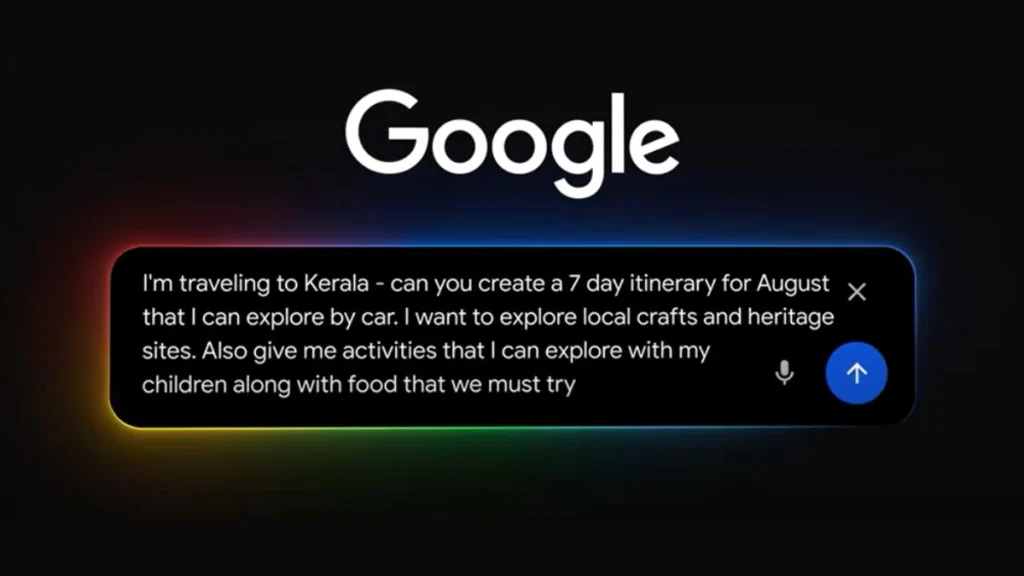
Today, that old model is being replaced by AI systems that do the research for us, giving rise to an “Answer Economy.” Generative AI adoption has reached a critical mass; ChatGPT now serves over 800 million weekly active users, and Perplexity processes nearly 780 million queries monthly. Instead of sending users to your site, these AI systems read the internet and deliver direct, comprehensive answers right on the search page.
This shift marks a transition from an Attention Economy (where brands compete for website clicks) to an Answer Economy, requiring a new strategy called Generative Engine Optimization (GEO). GEO is the practice of ensuring your brand is the one selected, summarized, and cited by AI engines. If traditional SEO was about being the first link, GEO is about being the foundational source behind the AI’s generated answer. For business leaders, visibility is now binary: your brand is either part of the “truth” the AI presents to the customer, or it is effectively invisible. With analysts predicting a 25% decline in traditional search volume by 2026, brands that do not adapt to this new reality will fade into digital obscurity.
The Collapse of the Click
The traditional SEO playbook isn’t dead, but it has fundamentally changed. The most important shift for business leaders to understand is the “Zero-Click Reality.”
- The Drop in Website Traffic: Because AI satisfies the user’s intent instantly, large-scale studies reveal that approximately 60% of Google queries now end without a single click to a website. When AI summaries are present at the top of Google, organic clicks to the number-one ranked website have plummeted by as much as 58% to 61%.
- How AI Researches: When a user asks a complex question, the AI breaks it down into 8–12 smaller research tasks, instantly searching the web for the “best” answer for each specific part before combining them into one summary. This means a smaller brand can beat a massive competitor by providing the most clear, extractable answer for a specific sub-topic.
- Trust is a Gatekeeper: In the past, having a trustworthy website gave you a slight ranking boost. In the AI era, it is a strict filter. An overwhelming 96% of AI citations come from sources with proven, verifiable expertise.
- The Freshness Factor: AI models heavily favor up-to-date information. If your company’s core content isn’t updated at least quarterly, it is three times more likely to be dropped by the AI as the model refreshes its data.
- Originality over Keywords: AI doesn’t care how many times you put a keyword on a page. It looks for “Information Gain”—unique data, expert quotes, and proprietary statistics that your company provides, which cannot be found in the general consensus of other websites.
Building a Digital Reputation
In 2026, AI engines do not “read” your website like a human; they scan the internet for recognized entities (verifiable brands, people, and products). Google’s database now contains over 54 billion entities and 1.6 trillion facts, serving as the brain through which AI understands your brand identity.
Old SEO was like hanging a bright sign in your store window; modern AI optimization is more like building a verifiable industry reputation. ChatGPT and Google Gemini rely on patterns learned from across the entire internet. If your brand is not mentioned consistently by third-party platforms—like industry publications, Wikipedia, LinkedIn, and major news outlets—you are a “ghost” to the AI. In fact, 85% of the information AI learns about your brand comes from third-party sites rather than your own website, and brands with consistent coverage across multiple platforms see 2-3x higher inclusion in AI answers.
The AI Defense Strategy
To thrive, organizations must build a “Visibility Engine” built on technical precision and undeniable authority.
1. Technical Architecture: Making Your Site Machine-Readable Businesses must organize their website’s hidden code (known as structured data or schema) so that AI systems can instantly verify who you are, what you sell, and who your experts are. Properly layering this machine-readable code makes it 50% more likely that a brand will be selected as a trusted source. Furthermore, forward-thinking technical teams are now adding an llms.txt file to their websites—a simple text file that acts as a “cheat sheet,” allowing AI crawlers to summarize the brand without getting lost in complex website designs.
2. Content Engineering: The “Answer-First” Approach AI systems favor content that gets straight to the point. Every major page or article must lead with a concise, definitive answer of 40–60 words. Opening paragraphs that answer the customer’s question immediately are cited 67% more often than content that buries the answer under marketing fluff.
3. Authority Building: The Power of Hard Data Groundbreaking research from Princeton University confirms that adding verifiable data to your content boosts your chances of being selected by AI by up to 40%.
- Citing External Sources: Boosts visibility by +41.51%.
- Adding Expert Quotes: Boosts subjective impression by 15-30%.
- Adding Statistics: Boosts visibility by +36.91%. Vague marketing claims are ignored; content that provides unique industry insights or proprietary data earns 4.1x more AI citations.
The Business Impact of AI Optimization
A global chemical manufacturer, Chemours Titanium Technologies, illustrates the financial impact of this shift. By cleaning up their website’s code for AI, publishing hard data, and using an “answer-first” content approach, the brand achieved:
- An 89% citation rate in ChatGPT for buyers asking about “best titanium dioxide manufacturers”.
- A 187% increase in inbound sales leads.
- A 34% shorter average sales cycle because prospects arrived already educated by the AI’s recommendations.
Measuring What Matters
Looking at basic website traffic is no longer enough. Success in 2026 is measured by Brand Exposure and High-Intent Conversions.
| Metric | What It Means | Where to Track It |
|---|---|---|
| Citation Frequency | How often your company is named as a recommended source in AI answers. This is your new “impressions” metric. | Bing AI Performance / Ahrefs Brand Radar |
| Branded Search Volume | The number of people searching specifically for your company name. This proves the AI is driving brand awareness. | Google Search Console |
| Share of Voice (AI) | How often the AI recommends you compared to your competitors. This measures if you are viewed as the market leader. | Manual Sampling / Ahrefs Brand Radar |
| Qualified Conversion Rate | The rate at which people buy or fill out a form after clicking through from an AI answer. | Website Analytics (GA4) |
Why These Metrics:
- Quality Over Quantity: A citation in ChatGPT may not immediately result in a website visit, but it creates powerful brand authority. Furthermore, when users do click through from an AI recommendation, they are already “pre-sold.” These highly-qualified visitors convert at up to 4.4x higher rates than standard search traffic, driving 35% more organic sales and 91% higher engagement.
- The Snowball Effect: AI models are trained on mass consensus. If data shows a high volume of users searching for your brand name alongside your industry (e.g., “Monday.com for project management”), AI systems learn that your brand is the definitive authority, increasing how often they recommend you to others.
- Winner-Takes-Most: In AI search, the top few brands capture the vast majority of recommendations. Tracking your Share of Voice tells you if the AI considers you a true market leader or just another face in the crowd.
Conclusion: The Window of Competitive Advantage
The shift from “Search” to “Synthesis” is complete. In 2026, the brands that dominate their industries will be the ones that stop chasing outdated algorithms and start becoming verified sources of truth for artificial intelligence.
This requires a strategic, long-term commitment. It typically takes 6–12 months to establish deep trust in AI knowledge databases. However, early adopters of this AI-first approach are already capturing 3.4x more highly-qualified traffic than competitors still relying on outdated SEO tactics. The way customers discover businesses has fundamentally changed; your strategy must ensure that when the AI speaks on your behalf, it does so with confidence, accuracy, and undeniable trust.